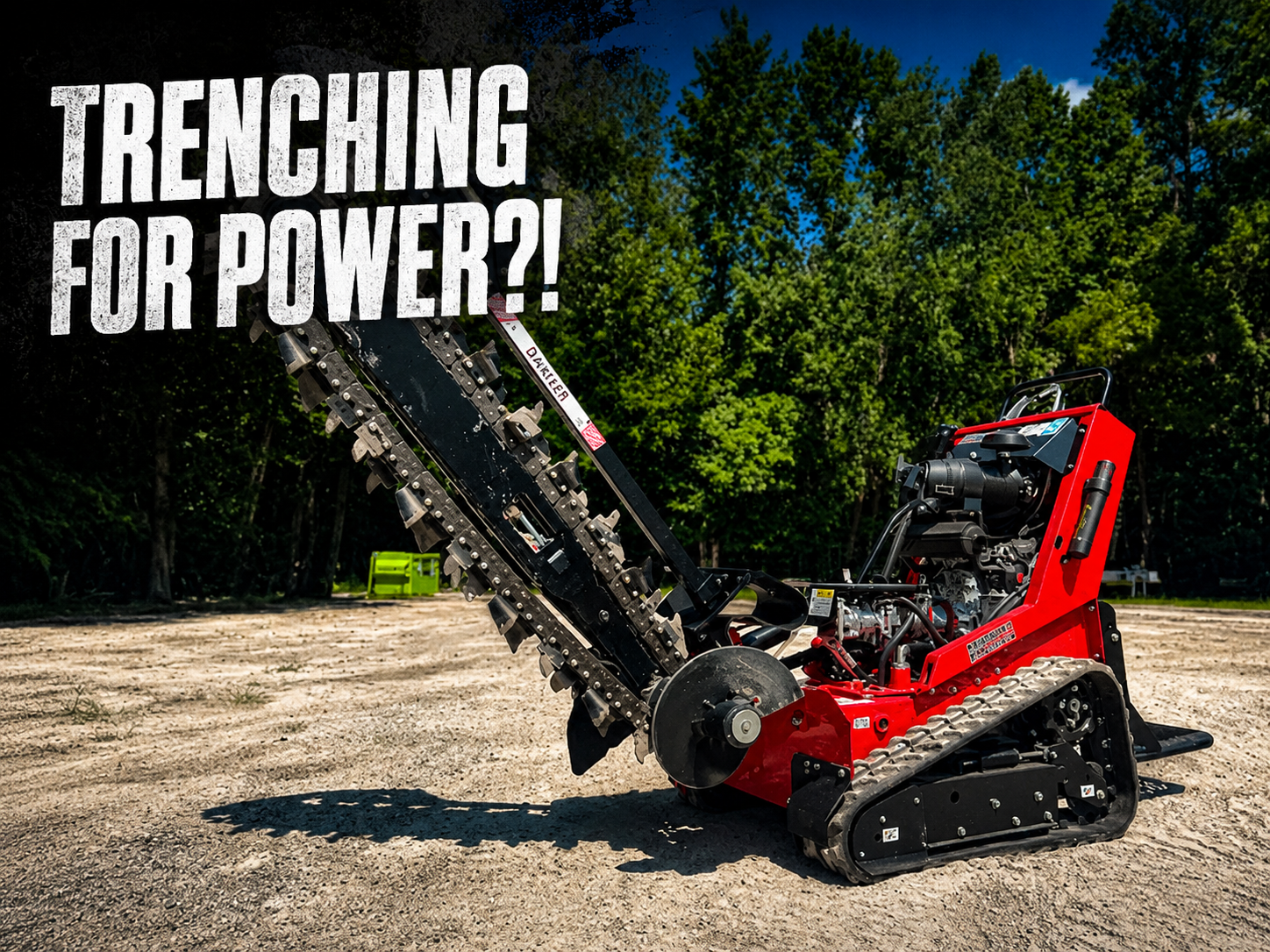
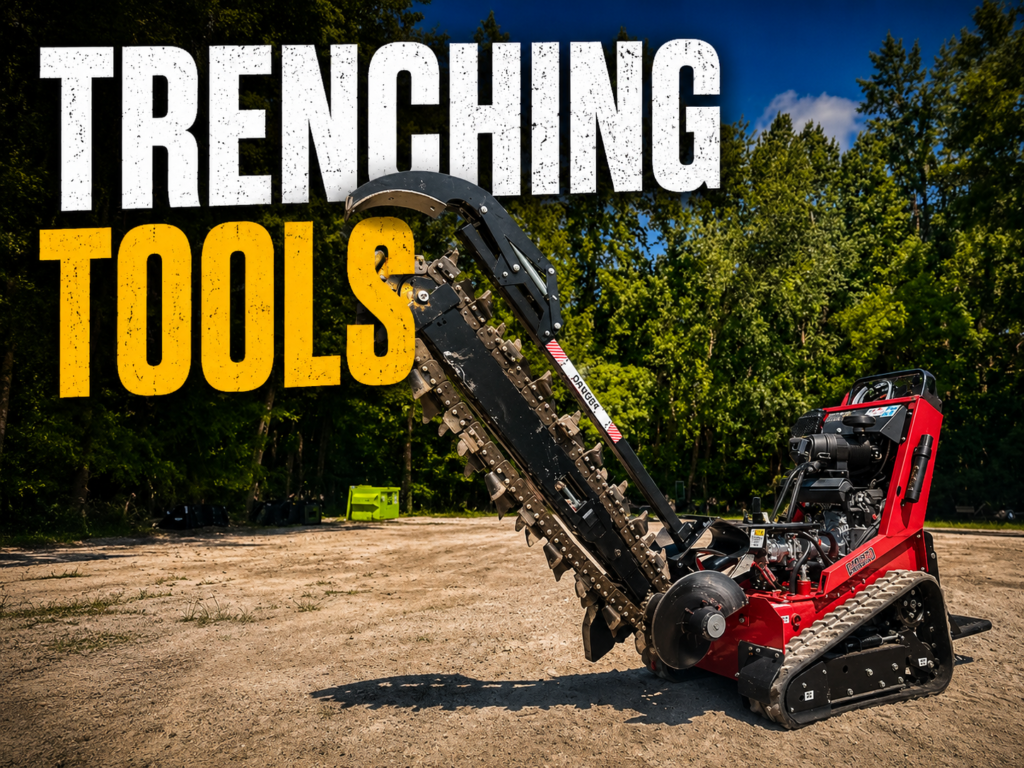
Installing a power supply line typically requires a trencher for digging the trench, with the choice between models depending on required depth – 24 inches for the Barreto 16STK or up to 48 inches for the 23RTK. The specific equipment you need depends on your burial depth requirements, soil conditions, and whether you’re running into underground obstructions like roots or clay layers.
Trenchers Are Your Primary Tool for Power Line Installation
When I talk to customers about installing power lines, the conversation almost always starts with trenching. The last customer who rented our Barreto 23RTK was running a line from their transformer to their home, and that trencher was the only piece of equipment they needed. No roots in the way, clean sandy soil, and they got the proper depth without any complications.
The key decision is which trencher matches your depth requirements. Our Barreto 16STK maxes out at 24 inches deep, while the 23RTK can go down to 48 inches. If your power line has specific burial depth requirements for inspection, you need to get this right the first time.
When Mini Excavators Make More Sense
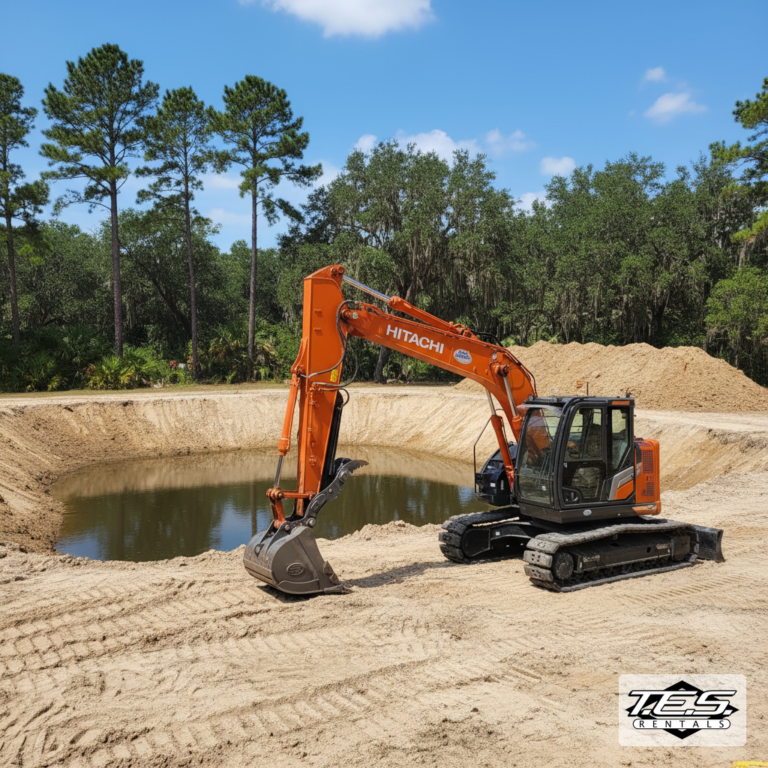
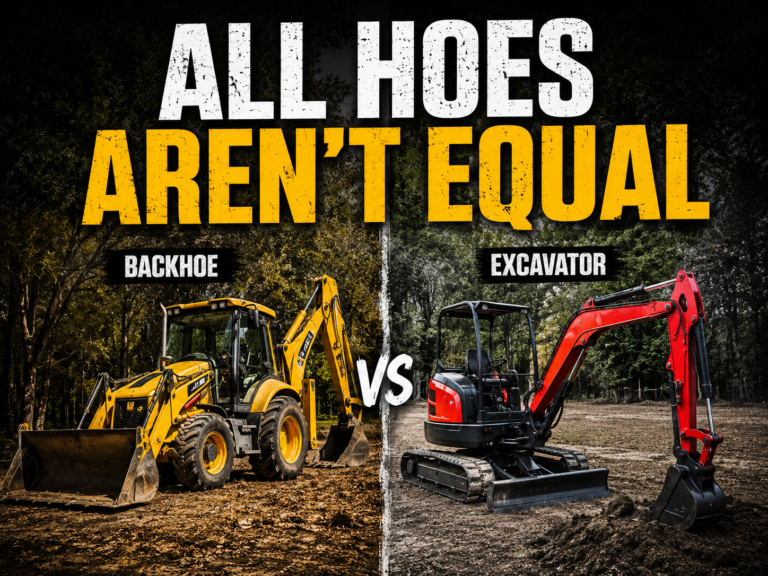
Most people assume a trencher is always the right choice, but that’s not always true. Whether they realize it or not, a small mini excavator can be the better option depending on your site conditions.
If your soil is very dry and sandy, you might run into cave-in problems with a narrow trench. An excavator lets you dig a slightly wider trench that stays stable. The same goes for situations where you hit a clay layer near the surface and need to go deep – the excavator handles tough digging conditions better than a trencher.
The excavator also shines when it comes to backfilling. It has a backfill blade that makes covering your line much faster and cleaner than doing it by hand.
Speed vs Versatility Trade-offs
Here’s the thing about trenchers – when conditions are right, they’re incredibly fast. If there are no underground obstructions, a trencher can complete your trench in far less time than an excavator. You’re looking at a clean, narrow cut that’s exactly the width you need.
But excavators handle obstacles better. Hit some roots or rocks? The excavator powers through. Need to work around existing utilities? The excavator gives you more control over exactly where you’re digging.
Soil Conditions in North Florida Matter
Our sandy soils around Starke, Lake Butler, and Keystone Heights generally work well with trenchers, but you need to watch for a few things. If you’re in an area with a lot of oak trees, you’re probably going to hit roots. Clay layers can show up unexpectedly, especially in low-lying areas.
Dry conditions make trenching faster but increase cave-in risk. After heavy rains, clay becomes sticky and clogs trencher chains. Timing your rental around soil conditions can save you both time and frustration.
Equipment Size Considerations
For most residential power line installations, our smaller trenchers handle the job fine. The 16STK works well for standard burial depths and fits through tighter spaces. The 23RTK is what you need for deeper commercial requirements or when local codes require deeper burial.
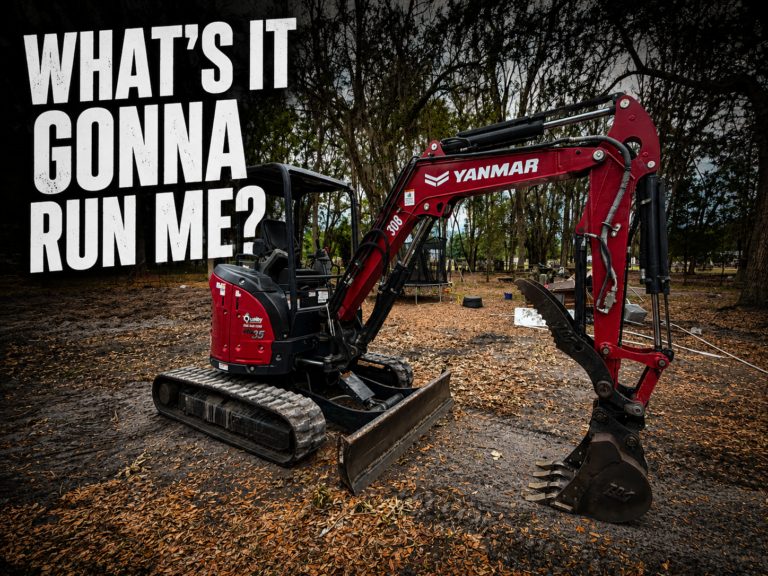
On the excavator side, our Yanmar ViO17 or ViO35 mini excavators are right-sized for power line work. Big enough to handle the digging and backfilling, small enough to avoid tearing up your property.
Don’t Underestimate the Physical Demands
I’ve had customers ask if they really need to rent equipment for what looks like a short trench run. The rental rate can seem expensive when you’re looking at a hundred feet or less. But when you factor in physical exhaustion, time, and back aches, the rental is well worth the expense.
Digging a trench deep enough for power line burial, by hand, in Florida heat, is brutal work. The equipment pays for itself in the first hour.
Planning Your Equipment Needs
Before you call, know your burial depth requirements. Check with your power company or local inspector about minimum depths. Measure your run and note any obstacles like trees, existing utilities, or structures you need to work around.
If you’re not sure about soil conditions, start with a trencher. Most power line jobs in our area work fine with trenching equipment. If you run into problems, we can always switch you to an excavator.
Additional Equipment You Might Need
Most power line installations just need the trenching equipment, but consider what else might help. A small utility trailer makes hauling materials easier. If you’re working in wet conditions, our Honda pumps can handle standing water.
For longer runs or commercial jobs, having a second person and some hand tools for finishing work around the connections makes the job go smoother.
The right equipment choice comes down to your specific burial depth requirements and site conditions, with trenchers handling most residential jobs efficiently.
Call and we’ll figure out the right equipment for your power line installation
Frequently Asked Questions
What’s the difference between the two trencher models?
The Barreto 16STK has a maximum depth of 24 inches, while the 23RTK can trench up to 48 inches deep. Choose based on your required burial depth – if your power line needs to be deeper than 24 inches, you need the 23RTK.
When should I choose an excavator instead of a trencher?
An excavator works better in very dry sandy soil that caves in easily, when you hit clay layers near the surface, or when there are underground obstructions like roots. Excavators also make backfilling much easier with their backfill blade.
How much faster is a trencher compared to an excavator?
In ideal conditions with no obstructions, a trencher can complete the trench in far less time than an excavator. However, excavators handle obstacles better and provide more control in difficult digging conditions.
Do I need any additional equipment besides the trencher?
Most power line installations only need the trenching equipment. You might want to consider a utility trailer for hauling materials or a pump if you’re working in wet conditions with standing water.
Is it worth renting equipment for a short trench run?
Yes, even for short runs, renting equipment is worth it when you consider the physical exhaustion, time, and back strain of digging a proper depth trench by hand in Florida heat. The equipment typically pays for itself in the first hour.
Zeb is the owner of T.E.S. Rentals in Starke, FL. With nearly 2 decades in the industry he helps North Florida contractors and property owners choose the right equipment for land clearing, excavation, and property work.