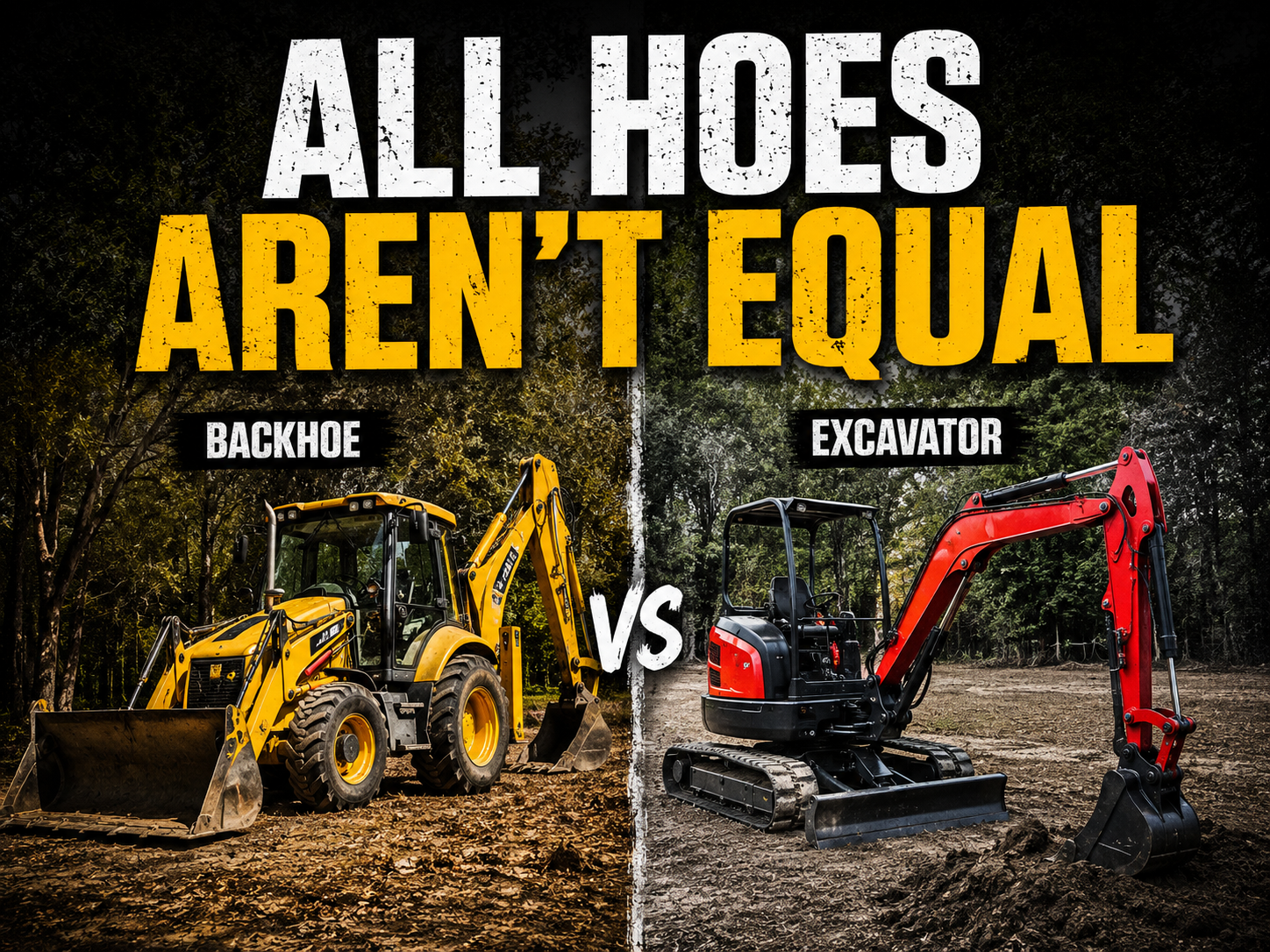
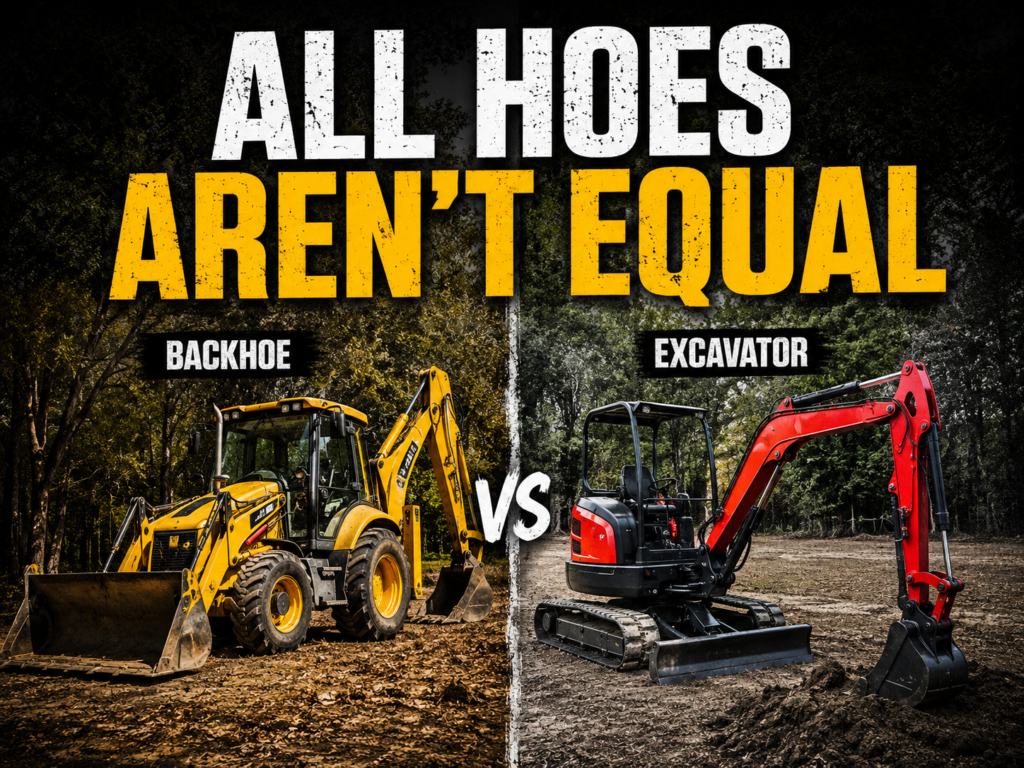
Backhoe vs Excavator: A backhoe is a tractor-based machine with a loader bucket in front and digging arm in back, while an excavator is a dedicated digging machine that rotates 360 degrees on tracks. For most earthwork projects in North Florida, you’ll choose based on whether you need the versatility of a backhoe or the superior digging power and reach of an excavator.
The Basic Design Differences
The biggest difference between these machines is right there in how they’re built. A backhoe is essentially a tractor with a loader bucket mounted on the front and a digging arm (the hoe) mounted on the back. The operator sits in a cab that can swivel to face either direction, but the machine itself stays put while you’re digging.
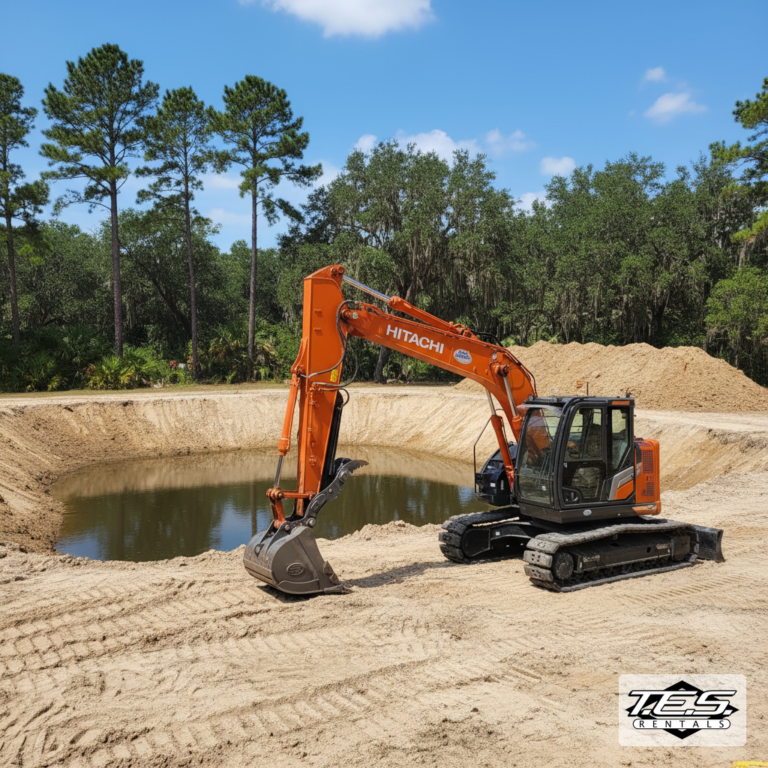
An excavator is purpose-built for digging. The entire upper structure – cab, engine, and digging arm – sits on a rotating platform that can spin a full 360 degrees. Most excavators run on tracks rather than wheels, which gives them better stability and ground pressure distribution.
Digging Capability and Reach
Excavators win hands-down when it comes to pure digging power and reach. The hydraulic systems are designed specifically for excavation work, and because the whole machine can rotate, you can work in a much larger area without repositioning.
Backhoes have less digging force and shorter reach, but they make up for it in versatility. You can dig a trench, then drive to your material pile and load a truck with the front bucket, all without switching machines.
Mobility and Transportation
Backhoes drive down the road on their own wheels. You can move from job to job without a trailer, which saves time and transportation costs. This makes them popular for utility work and smaller contractors who work multiple sites.
Excavators need to be trailed between job sites. Mini excavators under 10,000 pounds can go on lighter trailers, but full-size excavators require heavy-duty trailers and CDL drivers in many cases.
Which Projects Need Which Machine
Choose a backhoe when you need to do multiple types of work on the same job. Loading trucks, digging utility trenches, moving material piles, and grading work all happen efficiently with one machine. They’re also better for jobs where you need to move between work areas frequently.
Excavators are the right choice when digging is your primary task. Pond excavation, large drainage ditches, foundation work, and demolition all favor excavators. The superior reach and digging force make them more productive for heavy earthwork.
Size Classes and Applications
Backhoes typically range from compact models with 8-foot dig depth up to full-size machines that can dig 18 feet deep. Most rental fleets focus on mid-size models that balance capability with versatility.
Excavators come in a much wider range. Mini excavators start around 2,000 pounds and can work in tight residential spaces. Full-size excavators can weigh 100,000 pounds or more for major construction projects.
Operating Considerations
Backhoe operation requires more skill switching between front and rear controls, but the basics are straightforward for most operators. The wheeled design makes them faster for repositioning but less stable on soft ground.
Excavators have more intuitive controls since you’re always facing your work. The tracked undercarriage provides better flotation in soft conditions but moves slower between work areas.
Rental Decision Factors
Your site access matters. Backhoes need wider access routes but don’t need trailer delivery. Excavators, especially minis, can fit through tighter spaces but require transportation planning.
Consider your soil conditions too. Sandy soils common in North Florida favor tracked excavators for better flotation. Hard clay or rocky conditions might favor the mobility of wheeled backhoes.
Project duration affects the choice as well. Short-term projects often favor backhoes since you avoid trailer costs. Longer projects where digging efficiency matters typically justify excavator rental.
The right choice depends on whether you prioritize versatility or digging performance for your specific project requirements.
Not sure which machine fits your job? Call us at (904) 452-0888 and we’ll talk through your project requirements.
Frequently Asked Questions
Can a backhoe do everything an excavator can do?
No, backhoes have less digging force and shorter reach than excavators. While they can handle many of the same tasks, excavators are more efficient for heavy digging, deeper excavations, and jobs requiring extended reach.
Which machine is better for tight residential spaces?
Mini excavators are usually better for tight spaces. They’re narrower, can rotate 360 degrees to work around obstacles, and don’t need the clearance that a backhoe requires for its front and rear attachments.
Do I need a CDL to transport these machines?
Backhoes drive on public roads with a regular license, though some states have restrictions. Mini excavators under 10,000 pounds can be towed with a standard license, but larger excavators typically require CDL transport.
Which machine works better in sandy Florida soil?
Tracked excavators generally perform better in sandy soil because they distribute weight over a larger area and provide better flotation. Wheeled backhoes can sink or lose traction more easily in loose sand.
Are operating costs different between backhoes and excavators?
Backhoes typically have lower daily rental rates but may be less efficient for pure digging work. Excavators cost more to rent and transport but can complete digging tasks faster, potentially reducing total project costs.
Zeb is the owner of T.E.S. Rentals in Starke, FL. With nearly 2 decades in the industry he helps North Florida contractors and property owners choose the right equipment for land clearing, excavation, and property work.