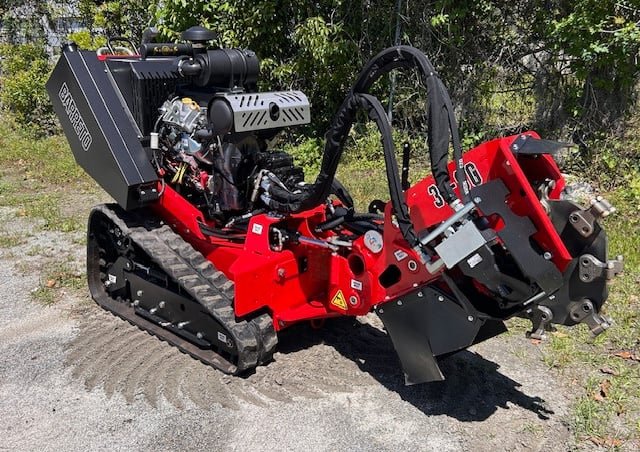
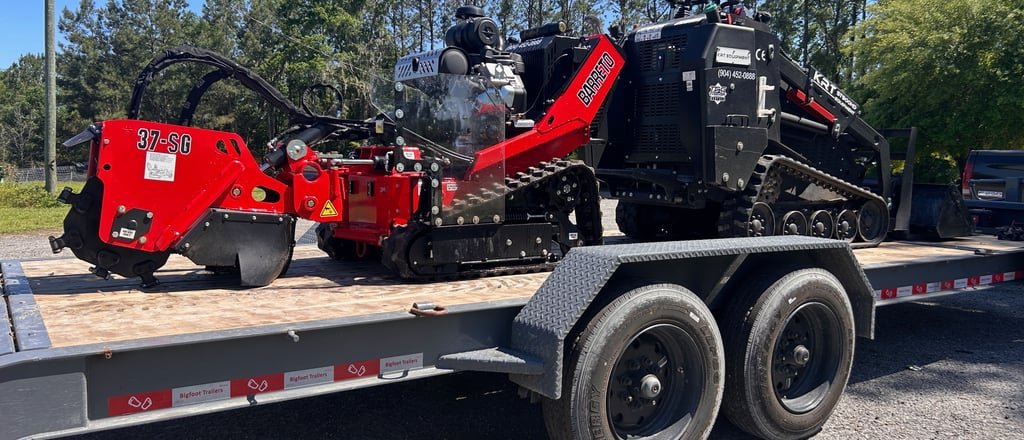
Safe stump grinder operation begins with wearing proper protective equipment (eye protection, hearing protection, steel-toed boots, and long pants), maintaining a firm stance with feet clear of the grinding wheel, and following the manufacturer’s instructions for your specific machine. First-time operators should start with smaller stumps, keep bystanders at least 30 feet away, and never reach toward the grinding wheel while it’s running or attempt to clear debris by hand.
Operating a stump grinder safely relies on respecting the machine’s power, wearing appropriate protective gear, and maintaining awareness of your surroundings and the equipment’s operating procedures. Proper preparation and cautious operation will help ensure the job gets done efficiently without injury.
Unsure about stump grinding safety? We got you. Call us at (904) 452-0888 or fill out our project inquiry form at tesrents.com.
Why Stump Grinder Safety Matters
Stump grinders are often underestimated.
Common assumptions:
“It’s just grinding wood”
“I’ll figure it out as I go”
“It’s like using a lawn mower”
In reality, the machine you’re renting is closer to commercial-grade equipment, with enough power to cause damage instantly if misused.
The Most Common Safety Mistake
The biggest mistake first-time users make is poor preparation.
Specifically:
Not cutting the stump low enough before grinding
Failing to inspect the ground around the stump
Grinding blindly into buried debris
Cutting the stump as low as possible with a chainsaw greatly improves efficiency and control. Inspecting below the surface with a shovel helps prevent tooth and holder damage.
What Customers Underestimate
Most first-time users are surprised by:
The power of the machine (37 HP is borderline commercial)
How violently debris can be thrown
How fast things go wrong when grinding too aggressively
This is not a consumer toy. Respecting the machine’s capability is essential.
Personal Protective Equipment (PPE)
At a minimum, operators should wear:
Safety glasses (bare minimum)
A full face shield (strongly recommended)
Flying debris is not theoretical, it’s constant. Eye and face protection are non-negotiable.
Site Preparation & Safety Perimeter
Before grinding:
Inspect the area around the stump for rocks, metal, or buried debris
Probe below the surface with a shovel if needed
Remove loose objects from the area
Minimum of 25 feet in all directions
Use safety screens in areas where a safe perimeter cannot be maintained
No bystanders. No exceptions.
Proper Grinding Technique
Most problems come from poor technique.
Common issues:
Trying to grind too fast instead of letting the machine work
Starting in the wrong position on the stump
Ignoring exposed above-ground roots
Best practice:
Grind surface roots first
Start at the correct edge of the stump (leading edge closest to the machine)
Use slow, controlled passes
Speed does not equal productivity with a stump grinder.
Ground Conditions & When to Reassess
Rocky soil should always be avoided.
A key warning sign:
If the machine begins to rise as you move forward onto debris, stop
This usually means ground material needs to be cleared so the cutting head can stay below grade. Continuing without clearing debris reduces control and increases risk.
DIY Homeowner Takeaways
DIY users often start intimidated and finish confident.
That confidence comes from:
Letting the machine work at its own pace
Staying methodical
Avoiding the urge to rush
Patience is the biggest safety tool you have.
Contractor Notes
Experienced operators are often pleasantly surprised by the efficiency of the machine.
They tend to:
Work slower but more deliberately
Maintain consistent control
Focus on total job time, not grinding speed
Efficiency comes from discipline, not aggression.
Cost, Risk, and Planning Notes
Safety and efficiency are tied together.
Grinding too aggressively can:
Damage teeth or tooth holders
Increase downtime
Create repair costs that far exceed time savings
Slow, steady operation is not just safer, it’s usually faster overall.
Our Rule of Thumb
If you’re unsure about anything, stop and reassess before continuing.
Pausing for 30 seconds beats recovering from damage or injury.
Frequently Asked Questions About Stump Grinder Safety
Do I need to cut the stump before grinding?
Yes. Cutting the stump as low as possible improves control and reduces grinding time.
How far should people stay away while grinding?
At least 30 feet in all directions. Flying debris is constant.
Why can’t I grind faster to save time?
Grinding too fast reduces control and increases wear. Slow, controlled passes are safer and more efficient.
Is a stump grinder dangerous for first-time users?
It can be if rushed or poorly prepared. With proper prep and patience, first-time users do well.
Pro Tip
Fresh-cut pine stumps are difficult to grind. Allow a minimum of 3–4 months of dry time before grinding for best results.
Internal Links
Next Step
If you’ve never used a stump grinder before, taking a few minutes to prepare properly will make the job safer, faster, and far less stressful. A quick conversation before renting can prevent most issues entirely.
Call us at (904) 452-0888 or fill out our project inquiry form at tesrents.com.
Zeb is the owner of T.E.S. Rentals in Starke, FL. With nearly 2 decades in the industry he helps North Florida contractors and property owners choose the right equipment for land clearing, excavation, and property work.