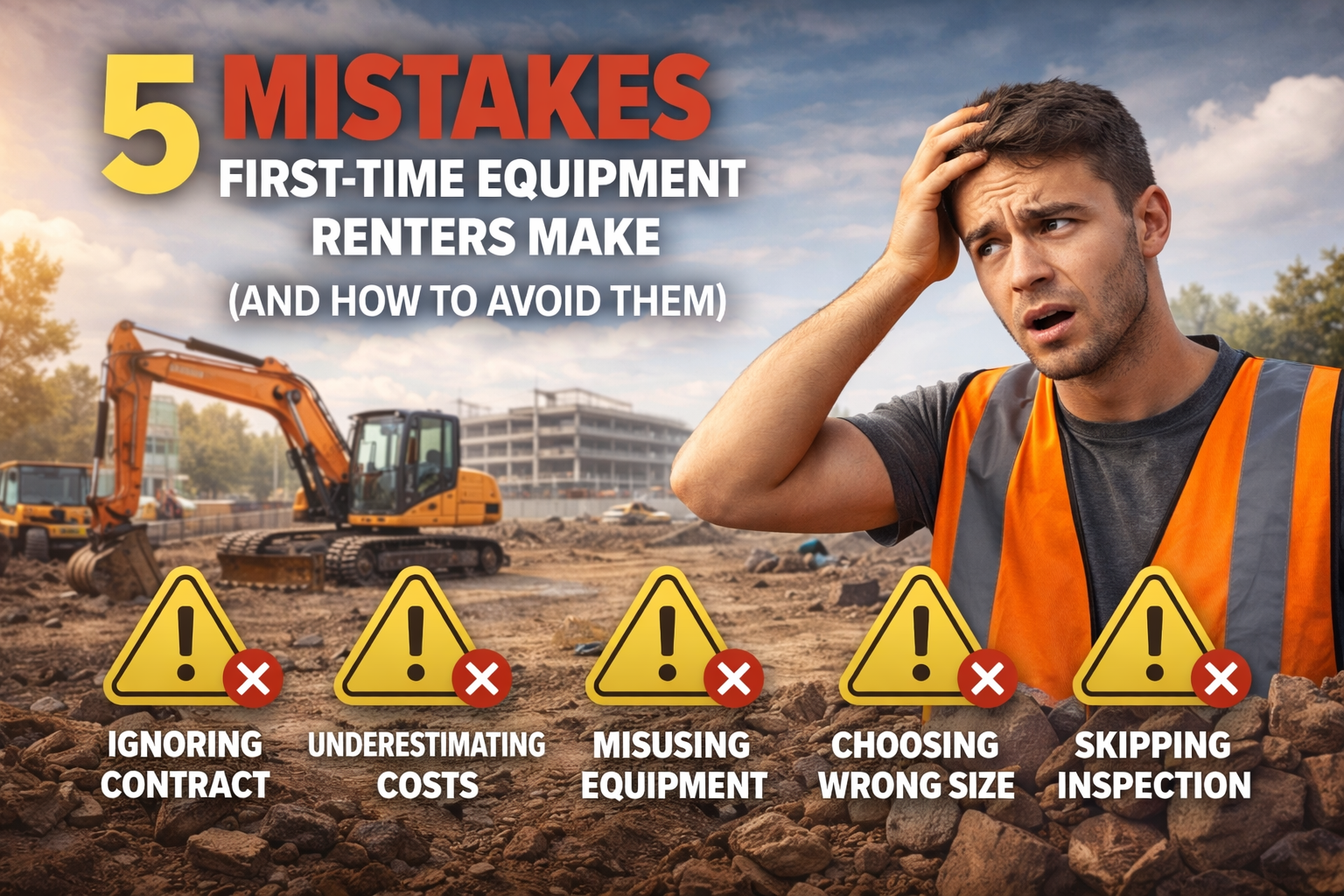
First-time equipment renters commonly underestimate project requirements, fail to inspect equipment before leaving the lot, skip the fine print on rental agreements, rent inadequate equipment for the job, and neglect to ask questions about operation or maintenance. Avoiding these mistakes requires honest assessment of your needs, a thorough pre-rental walkthrough, careful attention to contract terms, selecting equipment rated for your specific task, and consulting with rental professionals who understand your project scope.
Taking time to prepare before renting (understanding what you need, reviewing agreements carefully, and asking questions) saves money, prevents project delays, and reduces the risk of damage charges or safety issues. The difference between a smooth rental experience and a costly mistake often comes down to doing your homework upfront.
Want help thinking through your project? Call us at (904) 452-0888 or fill out our project inquiry form at tesrents.com.
Why First-Time Renters Struggle More Than They Expect
The issue is rarely effort.
It’s assumptions.
First-time renters often:
Assume smaller equipment is easier
Assume bigger equipment is harder
Focus on daily rate instead of capability
Ignore how soil conditions affect performance
Skip fully reviewing rental policies
Most frustration begins before the machine ever arrives.
Mistake #1: Not Understanding the Rental Agreement and Damage Policies
The most expensive mistake is not reading and understanding the rental agreement.
Common issues include:
Fuel not returned full
Excess hours beyond the rental period
Damage charges after improper use
Recovery costs
Many frustrations occur when additional charges are added after the rental ends.
Those charges are never arbitrary.
They are typically tied to:
Damage
Self-recovery attempts
Fuel discrepancies
Overtime usage
It’s completely normal to be unfamiliar with our rental policies before renting.
However, reviewing them carefully beforehand prevents almost all misunderstandings.
Mistake #2: Choosing Equipment Based on Price Instead of Project Fit
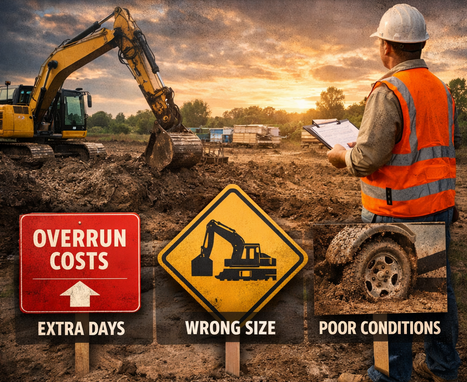
It’s natural to compare daily rates first. However, choosing the lowest price without evaluating whether the machine is truly capable of completing the job efficiently usually leads to longer rental time.
The result is often:
Slower production
Rental extensions
Incomplete work
A machine that is too small almost always costs more in total time.
(Internal link: How to Choose the Right Equipment for Your Project)
Mistake #3: Underestimating Ground Conditions
In North Central and North East Florida, moisture changes everything.
Ground conditions are one of the most underestimated factors for first-time renters.
Common issues include:
Machines becoming stuck in muddy or mucky terrain
Rutted worksites
Lost time due to recovery
Surface damage
For example:
A renter selected a mini excavator to clear a property line. The machine itself was appropriate for the task. The mistake was assuming the ground conditions were firm enough to complete the project.
The result:
The machine became stuck
Damage occurred during attempted self-recovery
A technician had to recover the unit
Rental time was lost
Additional charges applied
The machine was correct. The ground assessment was not.
(Internal link: How Rain Impacts Equipment Rentals)
Mistake #4: Assuming Smaller Equipment Is Easier
Many first-time renters assume:
Smaller machines are safer
Bigger machines are harder to operate
In reality, undersized equipment often requires more repositioning, more passes, and more corrective work.
Smaller does not mean easier.
Properly sized equipment is usually more efficient and often easier to operate productively.
(Internal link: What Size Excavator Do I Need for My Project?)
Mistake #5: Renting the Wrong Tool for the Work
Choosing the wrong machine type guarantees frustration.
Examples include:
Using a compact track loader to dig aggressively below grade
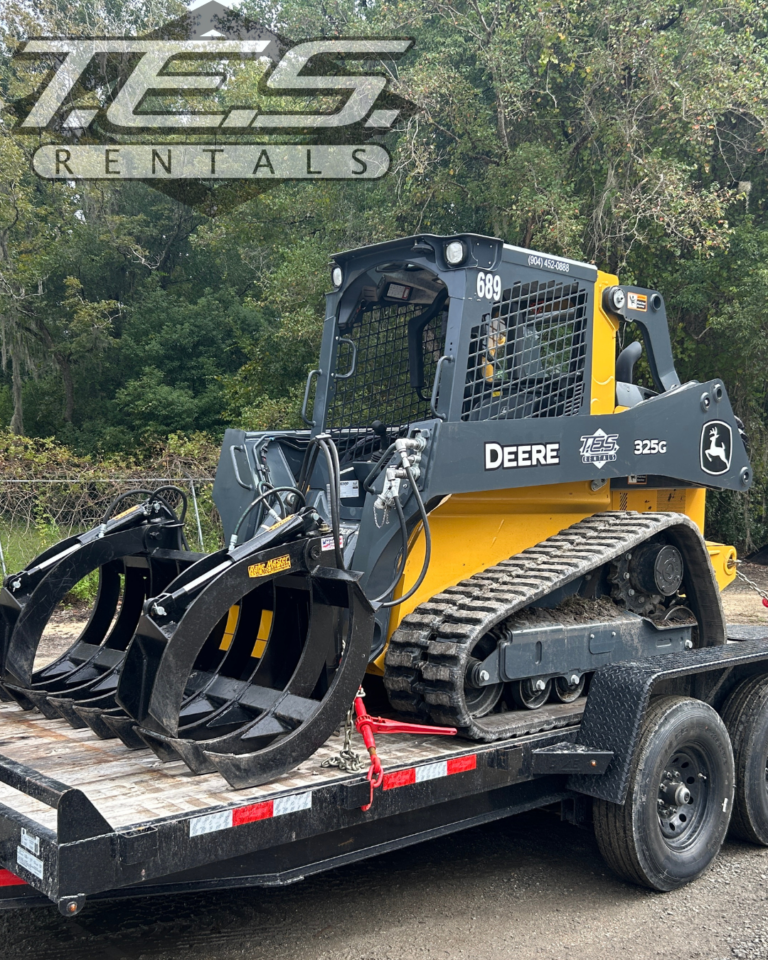
Using a bucket attachment when a grapple is needed
Attempting excavation work without an excavator
Choosing incorrectly often leads to:
Extended rental time
Incomplete projects
Additional charges
Most rental extensions stem from incorrect equipment selection.
Internal links:
Compact Track Loader vs Mini Excavator: Which Should You Rent?
DIY Homeowner Takeaways
If this is your first time renting equipment:
Read the rental agreement carefully
Choose based on project scope, not price alone
Evaluate soil and moisture conditions honestly
Expect a learning curve
Ask questions before reserving
Most avoidable problems happen before the rental begins.
Contractor Notes
Contractors generally understand:
Machine capability differences
Cycle time efficiency
Attachment selection
Where even experienced operators can encounter issues is with marginal ground conditions or unfamiliar attachments.
Moisture and access affect everyone.
Local & Practical Considerations
In North Florida:
Sandy soil may appear stable but can lose traction or collapse
Clay soil increases drag and recovery risk
High water tables affect trenching
Moisture amplifies equipment limitations
Ground assessment directly impacts productivity and cost.
(Internal link: Sandy vs Clay Soil: How It Affects Equipment Choice in Florida)
Cost, Risk, and Planning Notes
The most common drivers of additional charges are:
Damage from improper use
Excess hours
Fuel discrepancies
These are not hidden costs.
They are preventable costs.
Proper planning eliminates most of them.
Professional Next-Step Recommendation
If this is your first time renting equipment, it’s worth discussing your project and site conditions before reserving.
A short conversation about machine capability, ground moisture, and rental policies prevents most first-time mistakes.
Call us any time at 904-452-0888 and we’ll are more than happy to walk with you through this project.
Planning reduces cost more than price shopping ever will.
Zeb is the owner of T.E.S. Rentals in Starke, FL. With nearly 2 decades in the industry he helps North Florida contractors and property owners choose the right equipment for land clearing, excavation, and property work.