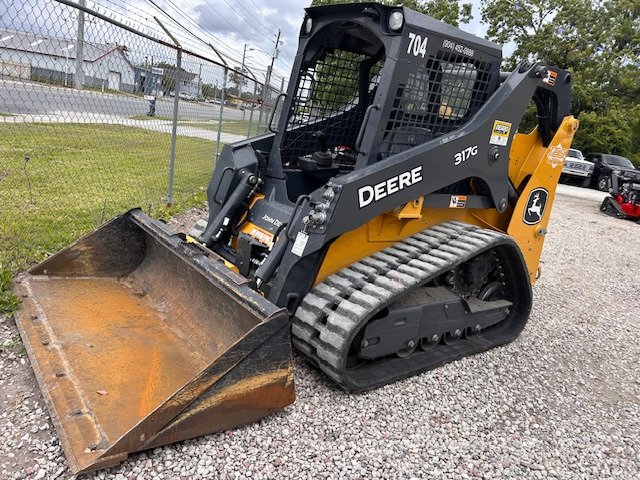
Each compact track loader attachment serves a specific function (general purpose buckets handle loose material and light grading, grapples manage brush and debris, forks move palletized loads) and matching the right attachment to your task prevents equipment damage, reduces jobsite delays, and improves work efficiency. Selecting attachments should occur during the same planning phase as choosing your machine, not as an afterthought.
We frequently see compact track loaders requested with attachments that are poorly matched to the work. Buckets used for clearing, grapples used for digging, or forks pushed beyond their limits are common examples. The result is slower work, more surface damage, and higher wear on the equipment.
The attachment you choose determines how effectively your compact track loader performs on the job, and mismatched selections lead to slower work and higher wear costs. Taking time to match the right attachment to your specific task is as important as selecting the machine itself. How to Choose the Right Equipment for Your Project
Not sure which attachment fits your project? Call us at (904) 452-0888 or fill out our project inquiry form at tesrents.com.
Options Breakdown
General Purpose Bucket
Best for:
Loading loose material
Light grading
Cleanup work
Not ideal for:
Brush and debris handling
Precise digging in tight areas
Handling irregular material
Limitations:
Limited control over debris
Can increase spillage and cleanup time
Grapple Attachment
Best for:
Brush and land clearing
Handling logs and debris
Controlled material placement
Not ideal for:
Fine grading
Loose soil loading
Limitations:
Reduced effectiveness in compacted soil
Requires attention to weight distribution
Pallet Forks
Best for:
Moving pallets or bundled materials
Setting materials in place
Jobsite logistics
Not ideal for:
Digging or ground contact work
Uneven or soft surfaces
Limitations:
Reduced stability on slopes
Easy to overload without realizing it
Auger
Best for:
Fence posts
Footings
Sign or pole installation
Not ideal for:
Rocky or root-heavy soil without proper bits
Wet clay conditions
Limitations:
Requires correct bit selection
Soil conditions greatly affect performance
Harley Rake or Soil Conditioner
Best for:
Final grading and surface prep
Seedbed preparation
Breaking up clods
Not ideal for:
Heavy excavation
Wet or saturated soil
Limitations:
Sensitive to moisture
Can damage turf if misused
DIY Homeowner Takeaways
The attachment controls how forgiving the machine feels
Using the wrong attachment increases learning difficulty
Tracked machines paired with the correct attachment reduce surface damage
Ask about attachments before renting, not after delivery
For first-time operators, the right attachment often matters more than extra horsepower.
Contractor Notes
Attachment choice directly impacts cycle time and finish quality
Grapples improve efficiency for clearing and cleanup
Forks simplify material handling but increase tip risk if overloaded
Attachment swaps should be planned, not improvised
Dialing in the setup reduces wasted motion and unnecessary wear.
Local & Practical Considerations
Florida soil conditions and moisture levels affect attachment performance. Sandy soil favors attachments that control material movement, while clay soil increases drag and resistance when wet.
Other local considerations include:
Limited access routes that restrict attachment changes
Wet conditions that reduce effectiveness of soil conditioning tools
Mixed soil layers that change performance mid-job
Preparing the site properly helps ensure attachments work as intended.
How to Prep Your Property Before Equipment Delivery
Cost, Risk, or Planning Notes
Attachment-related issues often show up as:
Slower production
Increased surface damage
Extra rental time to finish the job
Machine size and attachment pairing also matter. An attachment that works well on a smaller machine may overload a larger one or vice versa.
Planning the attachment setup ahead of time reduces downtime and avoids unnecessary risk.
If you are unsure which attachment fits your project, it is worth talking through the job before reserving equipment. The right attachment can save hours of work and prevent avoidable mistakes.
Questions about which equipment fits your project? Call us at (904) 452-0888 or fill out our project inquiry form at tesrents.com.
Zeb is the owner of T.E.S. Rentals in Starke, FL. With nearly 2 decades in the industry he helps North Florida contractors and property owners choose the right equipment for land clearing, excavation, and property work.