Can I Use a Rental Trencher to Install My Own French Drain?
Yes, you can. A rental trencher is exactly how most property owners get this done without hiring a crew. The machine does the hard work; your job is knowing what to expect before you start.
What the Machine Actually Does for You
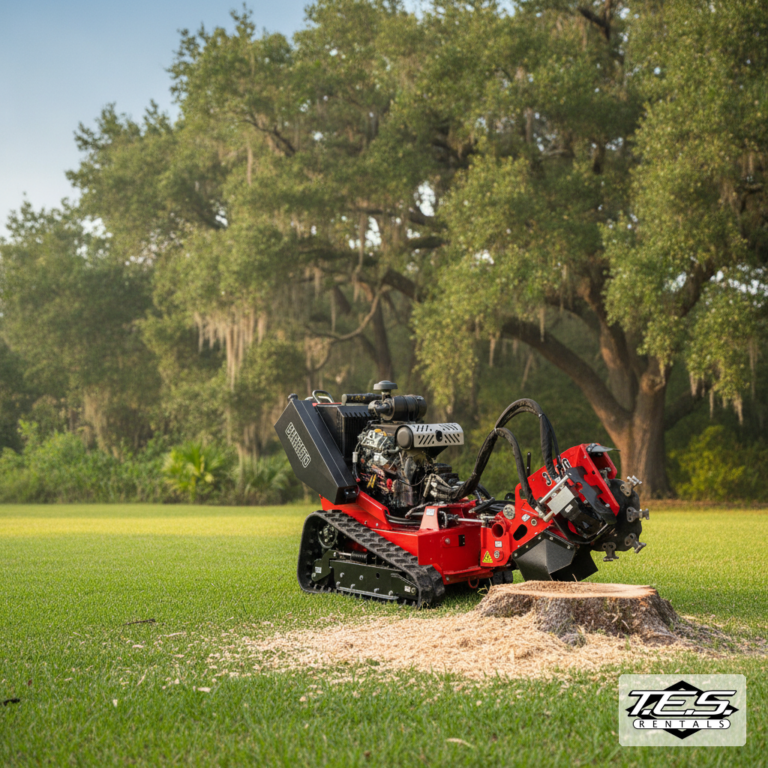
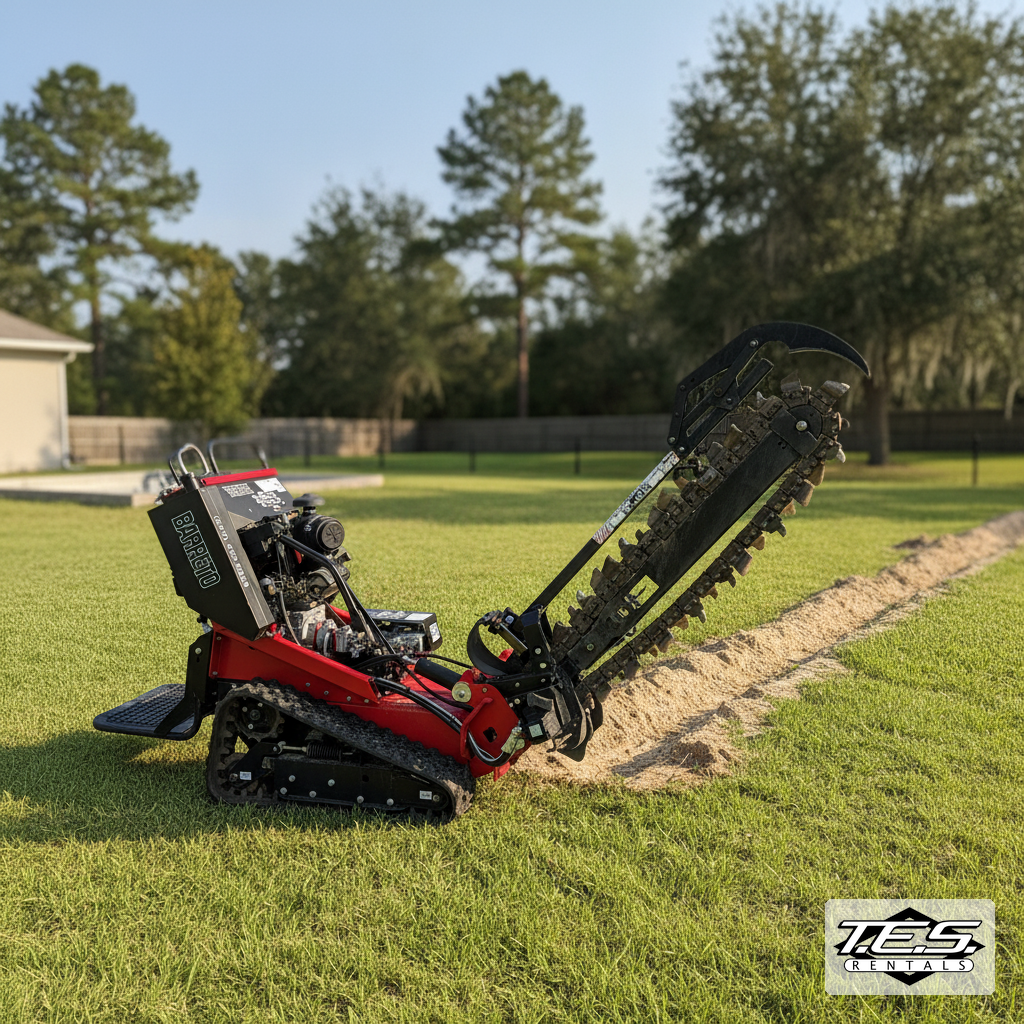
The Barreto 16STK is the trencher we rent most often for French drain jobs. It cuts a trench 4 inches wide and up to 24 inches deep, which covers the width range a French drain needs (typically 4 to 6 inches) and gives you more depth than most residential jobs require.
The thing that surprises first-timers consistently is speed. Everyone expects trenching to be a slow grind, and it isn’t. Hundreds of feet per hour is not uncommon when the ground is clear. You’ll spend more time setting up the drain materials than you will running the trencher.
We also carry the Barreto 23RTK as a walk-behind alternative if the 16STK isn’t the right fit for your site.
What Will Actually Slow You Down
Roots are the main variable on French drain jobs. Sandy open lawn goes fast. Get close to a tree line, and the pace changes.
When roots are in the way, give the machine time to work through them. If the trencher won’t cut through a root, lift the machine up, pass over it, and cut it off by hand. The practical advice is to plan your trench route as far from trees as possible before you start. Rerouting on the fly costs time and can complicate where the drain ends up.
Sandy soil brings a different issue. In areas where the soil is very sandy, trench walls can cave in. This is worth knowing ahead of time so it doesn’t catch you off guard mid-job.
Before You Dig
Call 811 before any ground-breaking. Most property owners already know this requirement, but it’s worth stating plainly: call, have your lines marked, and give yourself enough time between the call and the dig day.
When you come in to pick up the machine, we walk through the controls and how to trench before you leave. You don’t need to arrive knowing how to operate it, but showing up with your trench route planned and your materials staged will make the day go smoothly. Most customers who rent for this job have already thought through the project before they walk in, and that preparation shows in how the job goes.
Property owners near Starke, FL and Lake Butler, FL deal with a mix of sandy stretches and root-heavy yards depending on the property, so knowing which situation you’re walking into before you start is worth the few minutes it takes to walk the route.
Trencher or Mini Excavator?
For a straightforward French drain trench, a trencher is the right tool. It’s faster than hand-digging and purpose-built for a consistent cut at a controlled width and depth.
If your job involves more than just the trench, such as reshaping grade, digging around a structure, or working in a tighter spot where you need to move material, a mini excavator rental may be worth considering alongside the trencher. For most French drain installs, though, the trencher is what gets the job done.
How Long Will It Take?
If your trench route is clear and the soil cooperates, the trenching itself goes quickly. A clean run through open ground can cover hundreds of feet in an hour. Roots drag that rate down, sometimes significantly depending on how many you hit and how large they are.
Plan your rental around the total job, not just the dig time. Setting the pipe, placing gravel, and getting the drain seated takes time after the trench is open. If your route runs through areas with trees or you’re dealing with sandy soil that may need attention as you go, build in extra time rather than rushing the back end of the job.
FAQ
What trencher does T.E.S. rent for French drain jobs?
The Barreto 16STK is the most popular choice. It cuts 4 inches wide and up to 24 inches deep. The Barreto 23RTK is available as an alternative walk-behind model.
How fast can a trencher dig a French drain trench?
In clear ground, hundreds of feet per hour is not uncommon. Roots near trees are the main factor that slows the pace, sometimes considerably depending on how close the route runs to tree lines.
What should I do if the trencher won’t cut through a root?
Lift the machine up, pass over the root, and cut it off by hand. Planning your trench route as far from trees as possible before you start is the best way to avoid this situation.
Will sandy soil cause problems when I trench?
Sandy soil can allow trench walls to cave in. It’s worth knowing before you start so you can plan your approach and are not caught off guard if it happens mid-job.
Contact us to rent the Trencher rental that fits your French drain project, and we’ll walk you through the machine before you leave the yard.