
How to Prep Your Property Before Equipment Delivery
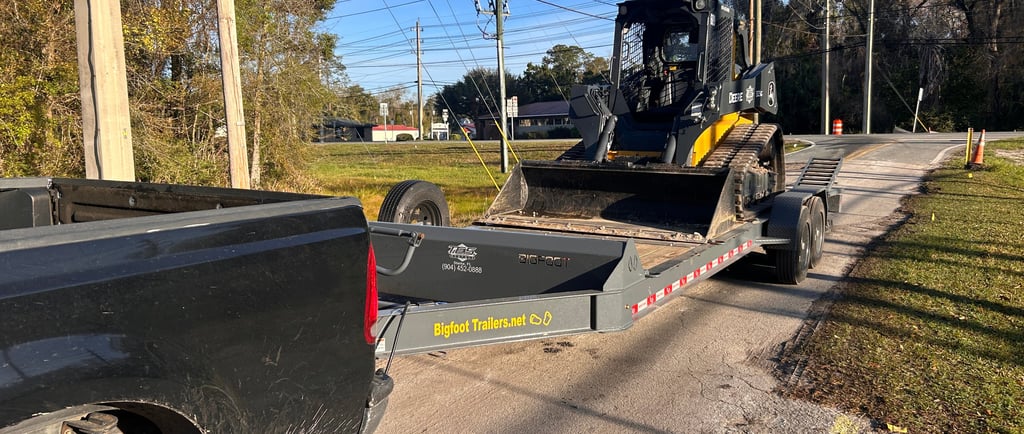
Preparing your property for equipment delivery is mostly about access and space, not the equipment itself. The most common delivery problems we see involve narrow entrances, tight turns, soft ground, or insufficient room for a truck and trailer to maneuver. Heavy equipment cannot be “teleported” into place — it has to be safely driven in, unloaded, and turned around. When access is planned ahead of time, deliveries go smoothly. When it isn’t, time is lost and property damage becomes more likely.
1/29/20263 min read
Why Delivery Prep Matters More Than People Expect
Most delivery issues don’t involve the machine — they involve the path to get it there.
Common assumptions:
“If the machine fits, the truck will too”
“They’ll figure it out when they get here”
“It worked once before, so it’ll work again”
Heavy transport requires space, stability, and clearance. When any of those are missing, deliveries get complicated fast.
The Most Common Delivery Prep Failure
The single biggest issue we see is poor access, especially for larger equipment.
This usually shows up as:
Narrow gates or entrances
Tight driveway turns
No room to turn a truck and trailer around
Locked gates or unmarked access points
Low tree limbs over driveways or entrances
Sand or mud along the route or staging area
If the truck can’t physically reach the drop location, the delivery has to be improvised — and that’s where problems start.
Access, Clearance, and Turning Reality
Real-world delivery challenges include:
Gates that are wide enough for equipment but not the trailer
Driveways that don’t allow a wide turning radius
Culverts or shoulders that won’t support truck weight
No turnaround space once on the property
Heavy trailers don’t pivot like pickup trucks. Space to enter, unload, and exit matters.
Ground Conditions & Staging Areas
While underground issues aren’t always visible, surface conditions matter a lot.
Common trouble spots:
Deep sand or mud at the entrance
Soft ground where the truck needs to turn
Staging areas that look firm but aren’t
Customers should ensure there is solid, dry ground where unloading and turning will occur.
DIY Homeowner vs Contractor Prep
There’s a clear difference in how properties are prepared.
DIY customers often:
Underestimate transport requirements
Assume equipment can be placed anywhere
Don’t consider turning radius or trailer length
Contractors tend to:
Mark driveways or access paths with cones or ribbons
Provide roadside guidance on undeveloped properties
Plan alternate unload points in advance
Assist with unloading when shoulder access is required
Experience shows.
Florida Weather & Ground Conditions
Florida conditions change quickly.
Key considerations:
Deep sand and mud become major issues after rain
Dry conditions improve access but don’t eliminate turning limitations
During wet periods, extra space is critical to avoid getting stuck
Customers should plan for more room than they think they need, especially in normal (non-drought) conditions.
What Happens When Prep Is Poor
The honest reality:
Lost time usually costs the rental company, not the renter
We do what we can to make deliveries happen — even in sketchy situations
Time is lost when we have to reposition, recover, or find alternate access
Proper prep prevents those situations entirely.
Damage & Property Risk
Poor prep increases the risk of:
Deep ruts in turf
Driveway edge damage
Ground disturbance from sharp trailer turns
The sharper the turn — especially with a loaded trailer — the more damage is likely to occur.
Cost, Risk, and Planning Notes
Good prep:
Reduces delivery time
Protects turf and driveways
Lowers recovery risk
Prevents rushed or improvised unloading
Poor prep forces last-minute decisions that benefit no one.
Our Rule of Thumb
If the equipment can’t make it to the jobsite safely, the delivery probably shouldn’t happen yet — or a better delivery plan needs to be made.
Property Prep Checklist (High-Impact Items)
Before delivery, make sure:
The truck and trailer can turn from the road into the driveway or gate
The entrance and route are free of deep sand or mud
There is ample room to turn the truck and trailer around on site
Gates are unlocked and access is clearly marked
An alternate delivery point is identified just in case
These five steps eliminate most delivery problems we see.
Frequently Asked Questions About Equipment Delivery Prep
How wide does my gate or driveway need to be?
Wide enough for both the equipment and the trailer. If you’re unsure, ask before delivery.
Can equipment be unloaded on the road or shoulder?
Sometimes, but only if it’s safe and planned ahead. Contractors often assist with this on undeveloped sites.
Does rain really make that much difference?
Yes. Wet ground drastically increases the risk of getting stuck and limits where a truck can turn.
What if access isn’t ideal but I still need the machine?
A conversation ahead of time allows us to plan a safer alternative instead of improvising on arrival.
Internal Links
Next Step
If you’re unsure whether your property is ready for delivery, it’s worth talking through access and conditions beforehand. A few minutes of planning can prevent delays, damage, and unnecessary stress on delivery day.