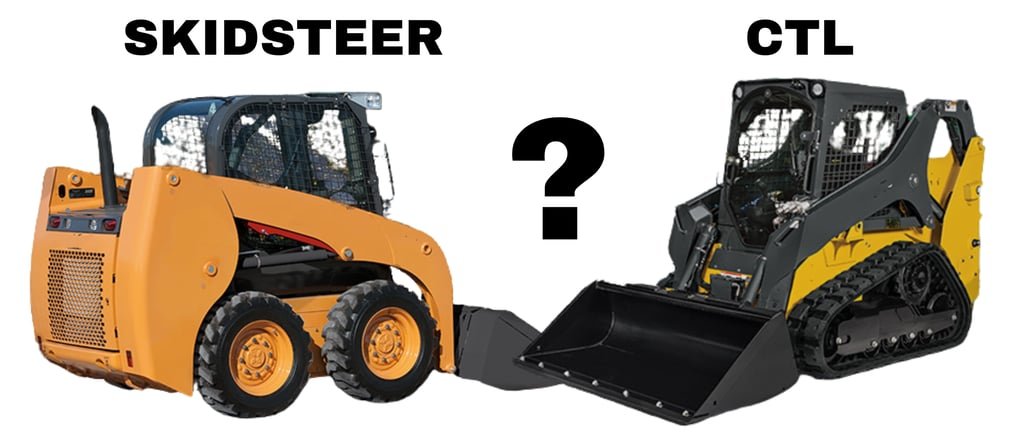
Compact track loaders outperform skid steers in Florida’s wet, sandy, and soft soil conditions because their tracks distribute weight more effectively, reducing ground damage and sinking. This is a critical advantage on jobsites with soft ground or unstable conditions. Skid steers remain faster, more maneuverable, and cheaper to operate on stable, well-drained ground, making them the better choice for paved or compacted surfaces and shorter-duration projects.
The choice between a skid steer and compact track loader depends primarily on your jobsite conditions. Select a track loader for Florida’s challenging terrain and wet ground, or a skid steer if your work is on solid, prepared surfaces.
Unsure which to choose? Lets talk. Call us at (904) 452-0888 or fill out our project inquiry form at tesrents.com.
Why People Confuse Skid Steers and Compact Track Loaders
One of the most common things we hear is customers using the term skid steer to describe any small loader.
In practice:
Many customers think CTLs are skid steers
The machines look similar and use the same attachments
The difference doesn’t become obvious until ground conditions matter
The confusion is understandable but the performance difference is significant once you’re off pavement.
The Key Difference: Wheels vs Tracks
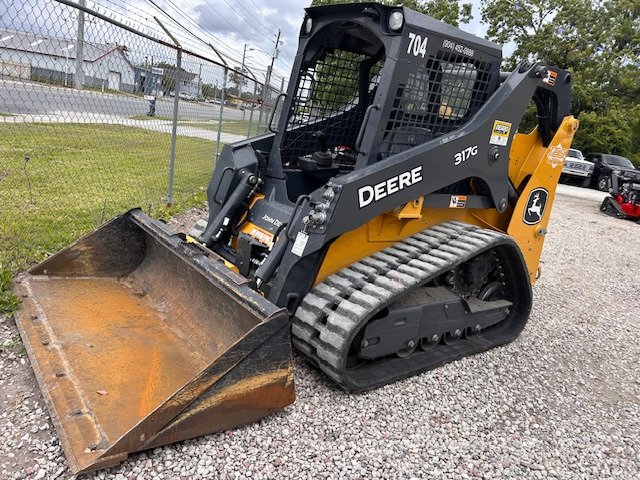
The biggest distinction between skid steers and compact track loaders is how weight is carried and transferred to the ground.
Skid Steers (Wheeled)
Concentrate weight at four contact points
Higher ground pressure
Limited flotation in soft or wet soil
Compact Track Loaders (Tracked) / CTL’S
Spread weight across a larger surface area
Lower ground pressure
Greater flotation and traction on soft ground
This difference alone explains why tracked machines perform better across most Florida jobsites.
Florida Ground Conditions: Where CTLs Win
Under normal Florida conditions (outside of drought periods), ground challenges are common.
Situations where compact track loaders clearly outperform:
Deep sandy soil
Wet or muddy ground
Soft yards and residential property
Areas with a high water table
Tracks reduce ground pressure and help the machine “float” instead of digging in, which dramatically reduces the chance of getting stuck.
This is the primary reason we focus on compact track loaders at T.E.S. Rentals.
When a Skid Steer Actually Makes Sense
Being honest matters.
Skid steers can work well when:
Operating on pavement, concrete, or asphalt
Working on compacted gravel
Running indoors or on finished hard surfaces
In these conditions, flotation isn’t a concern, and wheels can be efficient. The problem is that most Florida outdoor jobs are not on hard surfaces.
Property Damage & Ground Disturbance
Ground damage is one of the biggest concerns for homeowners.
From experience:
Wheeled machines tend to rut turf and dig in while turning
Tight turning motions concentrate damage in one area
Soft ground makes this worse
Compact track loaders help reduce this risk by:
Applying lower ground pressure
Using multiple-point, sweeping turns instead of sharp pivots
Maintaining traction without tearing up turf
Proper operation still matters, but tracks are far more forgiving in Florida conditions.
Stability, Traction, and Productivity
Compact track loaders offer:
Greater stability on uneven ground
Increased traction due to more drive surface in contact with the ground
More operator confidence in soft or wet conditions
That confidence translates into smoother operation and fewer interruptions caused by loss of traction or recovery issues.
DIY Homeowner Takeaways
DIY customers often prefer compact track loaders once they understand them.
Why:
They feel more stable
They compact the ground less
They are less likely to get stuck mid-project
For first-time operators, reducing the chance of recovery issues can make the difference between finishing the job and losing a day.
Contractor Notes
Contractors working in Florida already know this reality.
Tracked machines perform better because:
Florida soils are often heavy sand or wet and muddy
Jobsite access changes quickly with weather
Downtime from getting stuck is costly
For outdoor work, CTLs are often the safer, more reliable option.
Transport, Access, and Recovery Risk
One overlooked factor is recovery risk.
Things to consider:
Getting a wheeled machine stuck often requires outside recovery
Soft ground during delivery or pickup can create problems
Tracked machines reduce the likelihood of these issues from the start
Avoiding recovery scenarios saves time, money, and frustration.
Our Rule of Thumb
That simple guideline prevents most equipment selection problems we see.
Frequently Asked Questions About Skid Steers vs Compact Track Loaders
Are skid steers and compact track loaders the same machine?
No. While they look similar and use many of the same attachments, skid steers use wheels and compact track loaders use tracks. That difference significantly affects traction, ground pressure, and performance in soft or wet soil.
Why are compact track loaders better for Florida conditions?
Florida soil is often sandy, wet, or soft. Compact track loaders spread their weight over a larger surface area, which improves flotation, reduces ground disturbance, and lowers the risk of getting stuck.
When would a skid steer be a better option than a compact track loader?
Skid steers can work well on hard surfaces like pavement, concrete, or compacted gravel where flotation is not a concern. They are less suited for soft or muddy ground.
Do compact track loaders cause less damage to lawns?
Yes, when operated correctly. Tracks apply lower ground pressure and allow smoother, sweeping turns, which reduces rutting and turf damage compared to wheeled machines in soft conditions.
Related Reading
Next Step
If you’re unsure whether your project conditions favor a compact track loader, it’s worth discussing the details before reserving equipment. Soil conditions, access, and surface type matter more than most people expect.
Lets walk through the decision together. Call us at (904) 452-0888 or fill out our project inquiry form at tesrents.com.
Zeb is the owner of T.E.S. Rentals in Starke, FL. With nearly 2 decades in the industry he helps North Florida contractors and property owners choose the right equipment for land clearing, excavation, and property work.