
How Much Does It Really Cost to Rent Heavy Equipment?
The true cost of renting heavy equipment is driven by more than the daily rate. Machine size, rental duration, delivery logistics, attachments, ground conditions, and operator efficiency all influence the final cost of a job. Many projects go over budget not because rental rates are high, but because the equipment was poorly matched to the task or the job was not planned realistically. Renting the right machine for the right amount of time, with the correct setup, usually costs less than renting cheaper equipment that slows the job down. Understanding the real cost drivers helps set accurate expectations and avoid surprises.
2/23/20262 min read
One of the most common questions we hear is, “How much does it cost to rent heavy equipment?” The problem is that the answer depends heavily on how the equipment is used, not just what it costs per day.
Customers often underestimate how long a job will take, overestimate what a smaller machine can handle, or ignore access and ground conditions. These mistakes increase rental time, create delays, and drive up total cost. Equipment rental decisions should be made as part of a planning process, not as a line item pulled from a rate sheet.
(Internal link: How to Choose the Right Equipment for Your Project)
Focusing only on price usually leads to higher overall costs.
Options Breakdown
Rental Rate vs Total Job Cost
The rental rate is only one piece of the equation.
Other factors that affect total cost include:
Machine size and capability
Rental duration and scheduling
Attachments required for the job
Delivery and pickup logistics
Ground and weather conditions
A lower daily rate does not help if the job takes longer than expected.
Short-Term vs Longer Rentals
Best use cases for short rentals:
Well-defined, small projects
Sites with easy access
Experienced operators
Best use cases for longer rentals:
Multi-phase projects
Jobs affected by weather
Learning curve for first-time operators
Longer rentals often reduce pressure and mistakes, even if the daily rate is higher.
Renting Bigger vs Renting Smaller
Smaller machines appear cheaper but often struggle with productivity. Larger machines cost more per day but can finish the job faster and more safely.
Choosing the correct size matters more than choosing the lowest rate.
(Internal link: What Size Excavator Do I Need for My Project?)
DIY Homeowner Takeaways
Underestimating time is the most common cost mistake
Smaller equipment is not always cheaper once delays are factored in
Learning curve should be built into the rental plan
Planning for extra time often costs less than rushing
For homeowners, realistic planning is the biggest cost saver.
Contractor Notes
Productivity and cycle time drive true cost
Equipment choice affects labor efficiency
Weather delays should be planned into schedules
Access and logistics matter as much as machine rate
Accurate planning protects margins better than chasing low rates.
Local & Practical Considerations
In North Central and North East Florida, soil conditions and weather frequently impact job timelines. Sandy soil may allow faster work but increases cleanup, while clay soil can delay progress after rain.
Local factors that influence cost include:
Wet access roads or soft yards
Delivery constraints on rural properties
Seasonal rain patterns that interrupt work
Proper site preparation reduces delays and protects both equipment and property.
(Internal link: How to Prep Your Property Before Equipment Delivery)
Cost, Risk, or Planning Notes
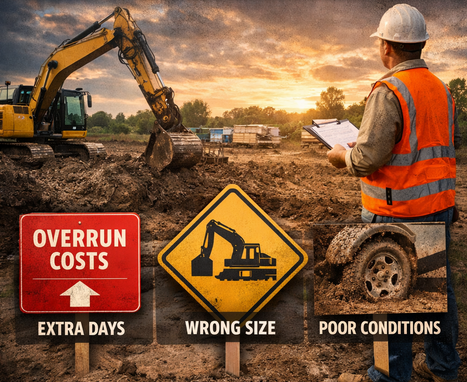
Unexpected costs usually come from:
Renting equipment that is undersized
Needing additional rental days
Recovering equipment from poor conditions
Fixing avoidable surface damage
Choosing equipment based on job requirements instead of price minimizes these risks.
If you want to understand what your project is likely to cost in real terms, it helps to talk through the details before reserving equipment. A short planning conversation can prevent unnecessary rental time and unexpected expenses.