
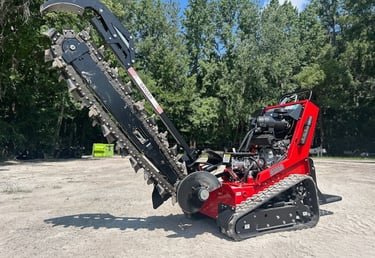
Digging a trench by hand in North Florida sand is miserable work, even on a short run. A trencher cuts a clean, consistent channel much faster, at a uniform depth and width that hand-digging can’t match. We carry two trenchers sized for different jobs: a 24-inch depth unit for shallow runs and a 48-inch depth stand-on unit for deeper work. The decision between them is simple, how deep and how wide do you need to go?
Or call now: (904) 452-0888
Two trenchers: sized by depth and width
Barreto 16STK: up to 24 inches deep, 4 inches wide
The 16STK is the right tool for shallow trenching jobs, irrigation lines, landscape lighting conduit, shallow drainage channels, and short utility runs that don’t need to go deeper than two feet. It cuts a narrow 4-inch trench, which means less backfill, less ground disturbance, and a cleaner finished result on maintained yards and landscaped areas.
This is the machine for the homeowner running a new irrigation zone across the backyard or extending a water line from the house to an outbuilding 50 feet away. It’s compact, manageable for first-time operators, and does clean work in the sandy topsoil that covers most of Bradford County.
Best for: irrigation systems, landscape lighting, shallow water line extensions, utility conduit runs under 24 inches deep.
View the 24″ walk behind trencher on our rental storefront →
48-inch stand-on trencher: up to 48 inches deep, 6 inches wide
When the job needs more depth, water line mains, deeper drainage runs, septic connections, or utility conduit that code requires below the frost or damage line, the 48-inch stand-on trencher handles it. The 6-inch cutting width accommodates larger pipe and conduit, and the stand-on platform gives the operator better visibility and control on longer runs.
This is the machine for well line connections, water main extensions from the road to a new structure, deeper drainage channels that need to hit a specific invert elevation, and any trench that needs to go beyond what the 16STK can reach.
Best for: well/water line mains, deep drainage channels, septic connections, utility conduit requiring 24 to 48 inches of depth.
How we decide which trencher fits
When you call about a trencher, we ask two questions:
How deep does the trench need to be? If it’s 24 inches or less, the 16STK is the right machine. It’s simpler to operate, cuts a narrower trench, and does less damage to the surrounding area. If the trench needs to go deeper than 24 inches, the 48-inch stand-on is the only option.
How wide does the trench need to be? The 16STK cuts a 4-inch channel. The 48-inch stand-on cuts 6 inches. If you’re running 4-inch pipe or larger conduit, the wider cut may be necessary regardless of depth. Check the outside diameter of whatever you’re laying in the trench before you call, it’ll save us both a step.
That’s it. Depth and width determine the machine. No upselling, no guesswork.
What you should know about trenching in North Florida
The sandy topsoil across Bradford County and most of our service area trenches easily, the machines cut through it quickly and the trench walls hold their shape well enough to work in. But there are two things that can change your experience.
Roots
Tree roots larger than about 1 inch in diameter are the main obstacle you’ll encounter. The trencher’s cutting chain can handle small feeder roots without issue, but once you hit a root with real diameter, especially oak or pine tap roots, the machine slows down, the chain gets deflected, and you may need to cut the root manually before continuing.
If you know your trench line runs near or through a tree’s root zone, expect slower going in those sections. Plan your route to avoid major root systems where possible. If the entire run is through a heavily rooted area, a mini excavator with a narrow bucket may be a better tool, it can cut through roots that would stop a trencher chain.
Clay hardpan at depth
If you’re using the 48-inch stand-on and trenching to its full depth, you may hit the clay hardpan layer that sits beneath the sandy topsoil across much of North Florida. The machine will cut through it. It’s not impossible, but it requires patience. The cutting speed drops noticeably in clay compared to sand, and the chain works harder.
This doesn’t mean the machine can’t do the job. It means a 100-foot run that takes an hour in clean sand might take two hours if you’re hitting clay for the last 12 inches of depth. If you’re on a tight timeline and expect to encounter hardpan, factor in the extra time when planning your rental period.
The most common trencher jobs in Bradford County
Irrigation system installation: The number one reason customers rent a trencher. Running new irrigation zones across a yard, connecting to an existing system, or installing a complete new system on a property that’s never had one. The 16STK handles most residential irrigation work, the lines don’t need to go deeper than 12 to 18 inches and the 4-inch channel is plenty wide for irrigation pipe.
Well and water line connections: Rural Bradford County properties run on well water. Connecting a new structure, a barn, a workshop, a guest house, to the existing well or running a new water line from the road requires a trench deep enough to protect the pipe from surface damage and freeze risk. The 48-inch stand-on is the standard tool for these runs.
Utility conduit: Electrical, data, or communication lines running underground between structures or from the road to a building. Depth requirements vary by code and by utility type, check with your electrician or utility provider before trenching so you know the required depth.
Drainage channels: Cutting shallow drainage trenches to redirect water away from foundations, driveways, or low-lying areas of a yard. French drains, curtain drains, and perimeter drains all start with a trench at the right depth and slope. The 16STK handles most residential drainage work; deeper channels move to the 48-inch unit.
Septic system connections: Running the line from a new or replacement septic tank to the structure. Depth depends on the tank location and the elevation difference, your septic installer or the county health department will specify the required depth.
Pickup, delivery, and rental details
Both trenchers are available for pickup or delivery. They’re compact enough to haul with a truck and utility trailer. If you’d rather have them delivered, we cover our full North Florida service area from our Starke yard. Delivery is an additional charge based on distance.
Rental periods: Half-day, daily, and weekly rentals available, plus our 4-for-2 option. Most residential trenching jobs, a single irrigation zone, a water line extension, a drainage run, finish in a half day to a full day. Longer runs or multi-zone irrigation installs may extend to a second day. We’ll help you estimate when you call.
Walkthrough included. Every trencher rental includes a walkthrough at pickup or delivery. We cover machine operation, cutting technique, how to maintain a consistent depth, and what to do when you hit a root or other obstruction. If you’ve never operated a trencher, the walkthrough takes 10 to 15 minutes and sets you up to run productively from the first cut.
When to trench vs. when to use a mini excavator
Both tools dig a channel in the ground. The trencher is the better tool when you need a narrow, uniform trench at a consistent depth, irrigation, utility conduit, water lines. The cut is clean, the trench walls are straight, and the ground disturbance outside the trench is minimal.
A mini excavator with a narrow bucket is the better tool when the trench line runs through heavy root systems that would stop a trencher chain, when the trench needs to be wider than 6 inches, or when the job involves both trenching and other excavation work (like digging a septic tank and running the connection line in the same rental).
If you’re not sure which tool fits, describe the run when you call, length, depth, what’s in the ground, and we’ll recommend the right one.
Why rent from T.E.S.
Two trenchers, matched to the job. We don’t rent one trencher and hope it works for everything. Shallow work gets the 16STK. Deep work gets the 48-inch stand-on. The decision is based on your trench specs, not on what happens to be available.
We tell you about the roots and the clay. Most rental companies hand you a machine and wish you luck. We tell you what to expect in the ground before you start, because knowing about the hardpan layer or the root zone ahead of time changes how you plan your day.
Owner-operated. Every call goes to Zeb. The recommendation, the walkthrough, and the support if you hit something unexpected mid-trench, all one person.
“Zeb was great to work with. He offered thoughts and suggestions on equipment that might be more budget friendly, he was looking out for me. His delivery was on time to the minute, and the equipment got the job done in less time than I imagined.”
J. Matthews
Get a quote
Tell us about the trench, how long, how deep, how wide, and what you’re laying in it. We’ll recommend the right machine and respond the same business day.
Or call now: (904) 452-0888
T.E.S. Rentals | 2000 N Temple Ave, Starke, FL 32091
Trencher Rental Across North Florida
We deliver trencher rental throughout North Florida, including Starke, Lawtey, Hampton, Lake Butler, Keystone Heights, Macclenny, Middleburg, Clay Hill, Melrose, Waldo, Hawthorne, Interlachen, Green Cove Springs, Palatka, and Baldwin.
Related Equipment
Sizing up a different job? Consider our mini excavator rental.